

From June 16 to 17, 2026, the 2026 Chartered Institute of Logistics and Transport (Langfang) Conference was successfully held in Langfang. Huang Youfang, Chairman of the Top 50 Shipping Elites Research Center (50SERC),attended the conference and delivered a keynote speech.
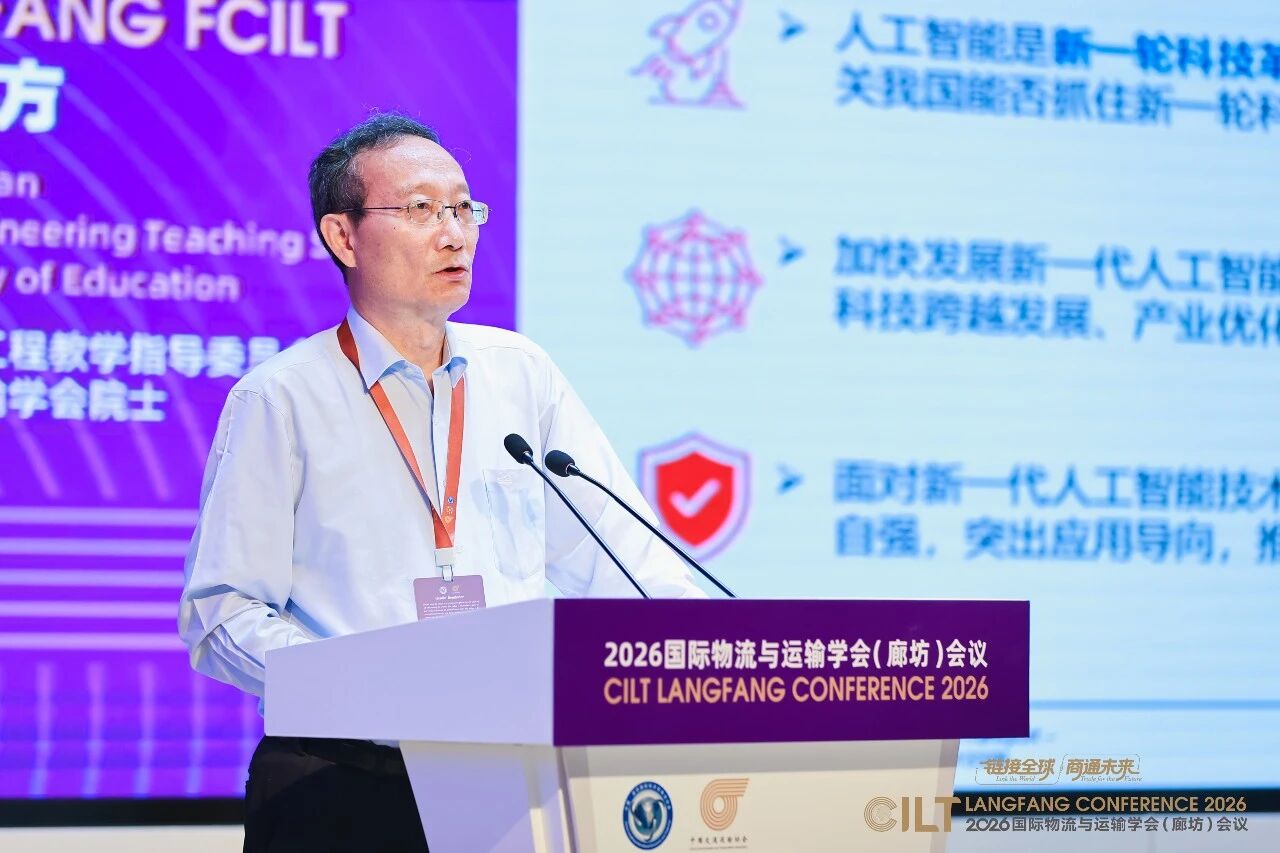 Huang Youfang, Chairman of the Top 50 Shipping Elites Research Center (50SERC).
Chairman Huang Youfang delivered a keynote speech titled “AI and the Future Development of China’s Transportation Technologies.”
Based on the global wave of artificial intelligence (AI) technological transformation and China’s strategy of developing itself into a transportation powerhouse, he systematically reviewed the national-level policy framework for artificial intelligence development, analyzed three major conceptual differences in the global AI field, and outlined the development pathway for AI-enabled integrated transportation.
Chairman Huang reviewed a series of major policy initiatives, including China’s “Artificial Intelligence Plus” action plan, the Ministry of Transport’s sector-specific implementation guidelines, and the Smart Shipping 2030 Action Plan.
He highlighted the three-stage development objectives for intelligent transportation in 2027, 2030 and 2035, emphasizing that artificial intelligence is a key strategic driver for China to gain a leading position in global technological competition and achieve the vision of “convenient mobility for people and efficient logistics for goods.”
Looking at global technological trends, Chairman Huang analyzed international debates surrounding AI development pathways, including approaches toward Artificial General Intelligence (AGI), open-source versus closed-source models, and AI safety versus accelerated development.
He provided an objective overview of the deeper ideological differences emerging within the AI industry amid large-scale global investment in artificial intelligence, offering an international perspective for China’s intelligent transformation of transportation.
Chairman Huang also reviewed representative AI application scenarios across the entire transportation chain, covering highways, railways, ports and shipping, civil aviation, postal services, infrastructure maintenance, and integrated freight and passenger transportation.
He elaborated on the “1+N+X” integrated transportation large-scale model architecture, consisting of “one foundational platform + multiple vertical domains + diverse application scenarios,” and explained implementation pathways involving high-quality industry datasets, coordinated computing resources, and industrial ecosystem collaboration.
Looking ahead to the 15th Five-Year Plan period, Chairman Huang highlighted five major innovation projects, including:
- autonomous driving fleets for heavy-duty trucks;
- intelligent navigation for inland and coastal vessels;
- intelligent monitoring of transportation infrastructure risks and disasters;
- digital brains for metropolitan transportation systems;
- green emission reduction in international shipping.
He proposed that the industry should rely on technological self-reliance, accelerate the application of technologies through real-world scenarios, strengthen digital foundations through large AI models, and promote industrial upgrading through major projects while balancing intelligent development with security governance.
Chairman Huang stated that the restructuring of global supply chains and the digital transformation of industries are deeply intertwined. The transportation sector must seize the opportunities brought by artificial intelligence, establish a complete development pathway from technological breakthroughs to scenario validation, industrial application and system upgrading, and continuously improve ecosystems for smart transportation, green shipping and autonomous transportation.
He emphasized that these efforts would inject digital technological momentum into the improvement of China’s modern logistics system, enhance global supply chain stability, and provide Chinese solutions and experience for the sustainable development of global smart transportation.
As an important part of the 2026 China Langfang International Economic and Trade Fair, the conference was themed “Connecting the World · Creating Business Opportunities for the Future.”
The event included activities such as the Supply Chain Cross-Domain Collaboration and Value Co-Creation Conference and the “Wei Mulan” Diversity and Collaboration Conference. It also released the “2026 Global Logistics Enterprises Top 50” report, creating a comprehensive platform integrating achievement release, cooperation opportunities and project implementation.
More than 300 domestic and international guests from four continents gathered in Langfang for the annual industry event.
The release of the “Global Logistics Enterprises Top 50” report was one of the highlights of the conference, demonstrating the strong growth of China’s logistics industry and highlighting the competitiveness achieved through cross-border trade, digital transformation and global expansion.
Source: China Communications and Transportation Association


