

The China-Europe Arctic Express has officially entered regular weekly operation after nearly one year of improvements in operational standards, fleet deployment and port service capabilities.
On August 15, Sealegend Shipping’s vessel Dubai Tower completed container loading operations at Ningbo-Zhoushan Port, marking the start of the 2026 summer navigation season for the China-Europe Arctic Express.
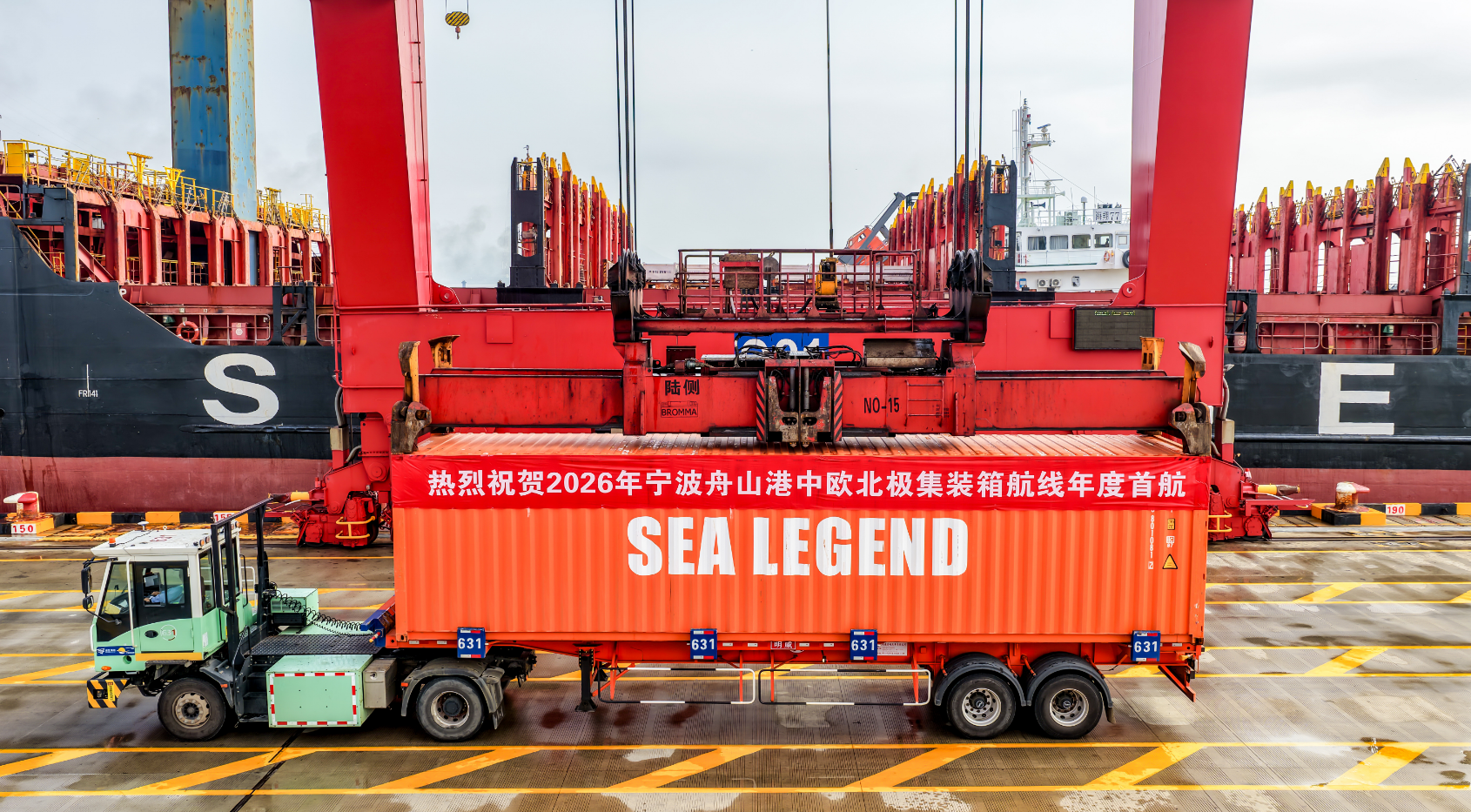
The route, operated through the Northeast Arctic Passage, provides a faster, greener and more resilient logistics channel between China and Europe. It also represents a significant practice in supporting the Belt and Road Initiative, the development of the “Ice Silk Road”, and the enhancement of global supply chain resilience.
In September 2025, Sealegend Shipping’s vessel Istanbul Bridge conducted the first trial voyage of the China-Europe Arctic Express, departing from Ningbo-Zhoushan Port and arriving at Felixstowe Port in the UK after a 20-day voyage via the Northeast Arctic Passage. The voyage successfully verified the feasibility of Arctic navigation, new energy hazardous cargo transportation and overseas port coordination.
Building on nearly one year of operational improvements, including service standards, fleet deployment and port support facilities, the China-Europe Arctic Express has now transitioned from a trial voyage into a regular weekly service.
The 2026 inaugural voyage will call at major European ports including Felixstowe, Rotterdam, Hamburg and Gdynia. The vessel carries high-value cargo such as energy storage systems, power batteries, photovoltaic components and new energy vehicle parts, mainly from manufacturing clusters in Ningbo, Yiwu and the Yangtze River Delta region.
Sealegend Shipping stated that the Arctic route completed the China-Europe voyage in around 20 days during the 2025 trial operation, nearly halving transit time compared with traditional Suez Canal routes while reducing exposure to congestion and geopolitical risks.
To ensure stable operation, Sealegend Shipping has established a comprehensive safety management system covering advance planning, intelligent monitoring, specialized fleet deployment and emergency response. The company also cooperates with major European ports, including Felixstowe, Rotterdam, Wilhelmshaven and Antwerp, to improve port efficiency through priority berthing arrangements.
Due to Arctic ice conditions, the annual navigation window is currently concentrated between July and October. In 2026, the operator plans to operate at least eight voyages with seven to eight ice-strengthened vessels, some of which will use LNG fuel to further reduce environmental impact.
With standardized operations, dedicated port services and improved logistics capabilities, the China-Europe Arctic Express is evolving into a regular logistics product with fixed capacity and predictable schedules, providing a new transport option for resilient China-Europe supply chains.


