

Manufacturing associations should solve supply chain and logistics challenges faced by small and medium-sized manufacturing enterprises through cross-sector cooperation with logistics industry associations and other channels.
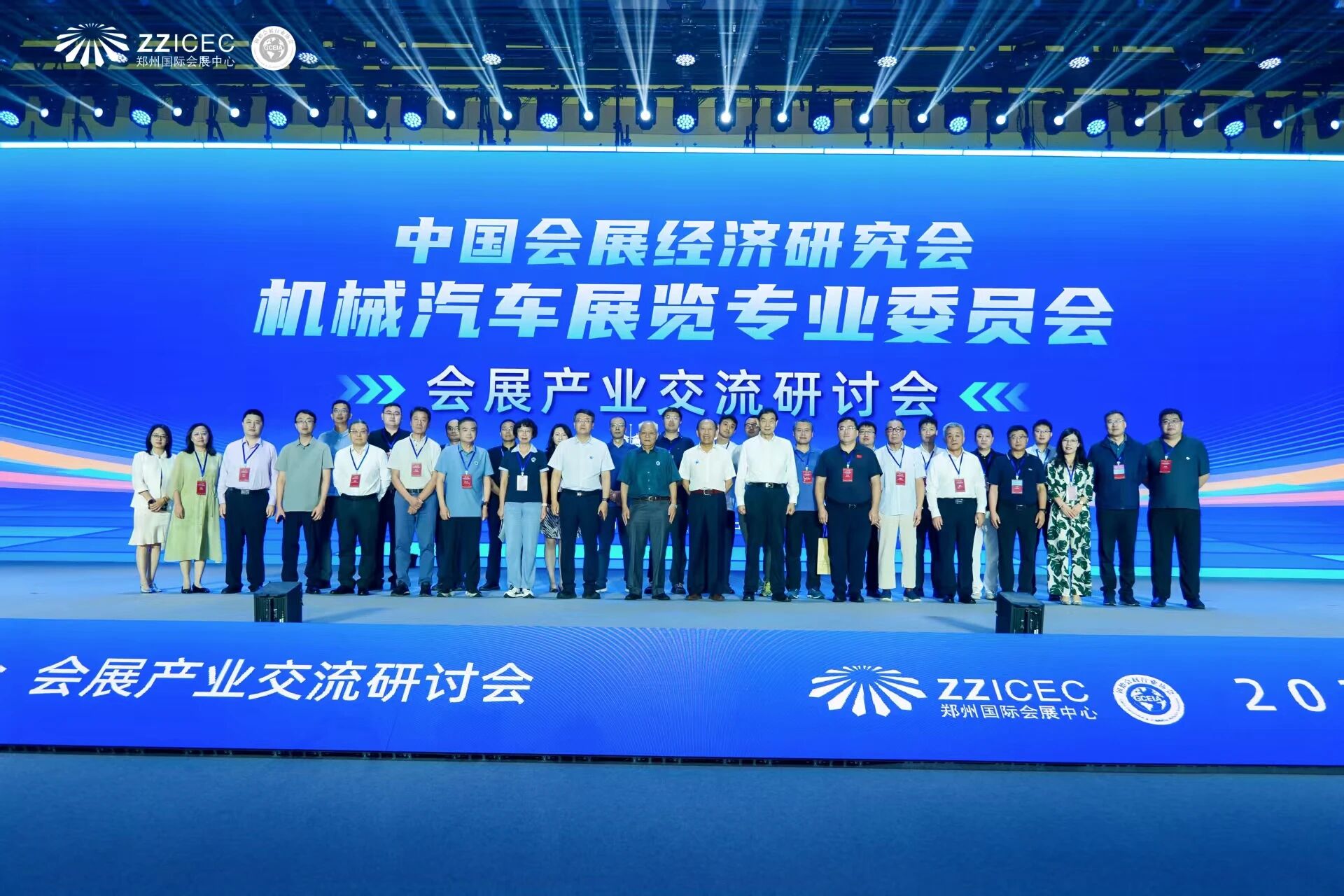
On August 22, the Industrial Exchange Seminar of the Machinery and Automotive Exhibition Committee of the China Convention and Exhibition Society was held at Zhengzhou International Convention and Exhibition Center.
The meeting was chaired by Jiang Huai, Vice President and Secretary-General of the China Convention and Exhibition Society. Zhang Daxing, Member of the Party Leadership Group and Deputy Director of the Henan Provincial Department of Commerce; Wang Liming, Executive Vice Chairman of the China Machine Tool & Tool Builders’ Association; Geng Yingqiang, Party Secretary and Chairman of Zhengzhou Cultural Tourism and Sports Group; and Wang Jie, Director of the Exhibition Organizers Committee of the China Convention and Exhibition Society, delivered remarks respectively. Yang Ming, Deputy General Manager of CMEC International Exhibition Co., Ltd. and Chairman of CIEC Exhibition Company, attended the meeting.
Representatives from machinery and automotive industry associations, including the China Construction Machinery Association, China Machine Tool & Tool Builders’ Association, China Internal Combustion Engine Industry Association, China Society of Automotive Engineers, China Electrical Equipment Industrial Association, China Foundry Association, China Food and Packaging Machinery Industry Association, China Plastics Machinery Industry Association, World Intelligent Manufacturing Alliance, China Surface Engineering Association, China Die & Mould Industry Association, China Hydraulics Pneumatics & Seals Association, Printing and Printing Equipment Industries Association of China, China General Machine Components Industry Association and Chinese Mechanical Engineering Society, gathered to discuss topics such as high-quality development of the exhibition industry, digital transformation, industry coordination and how exhibitions can empower manufacturing enterprises in expanding overseas.
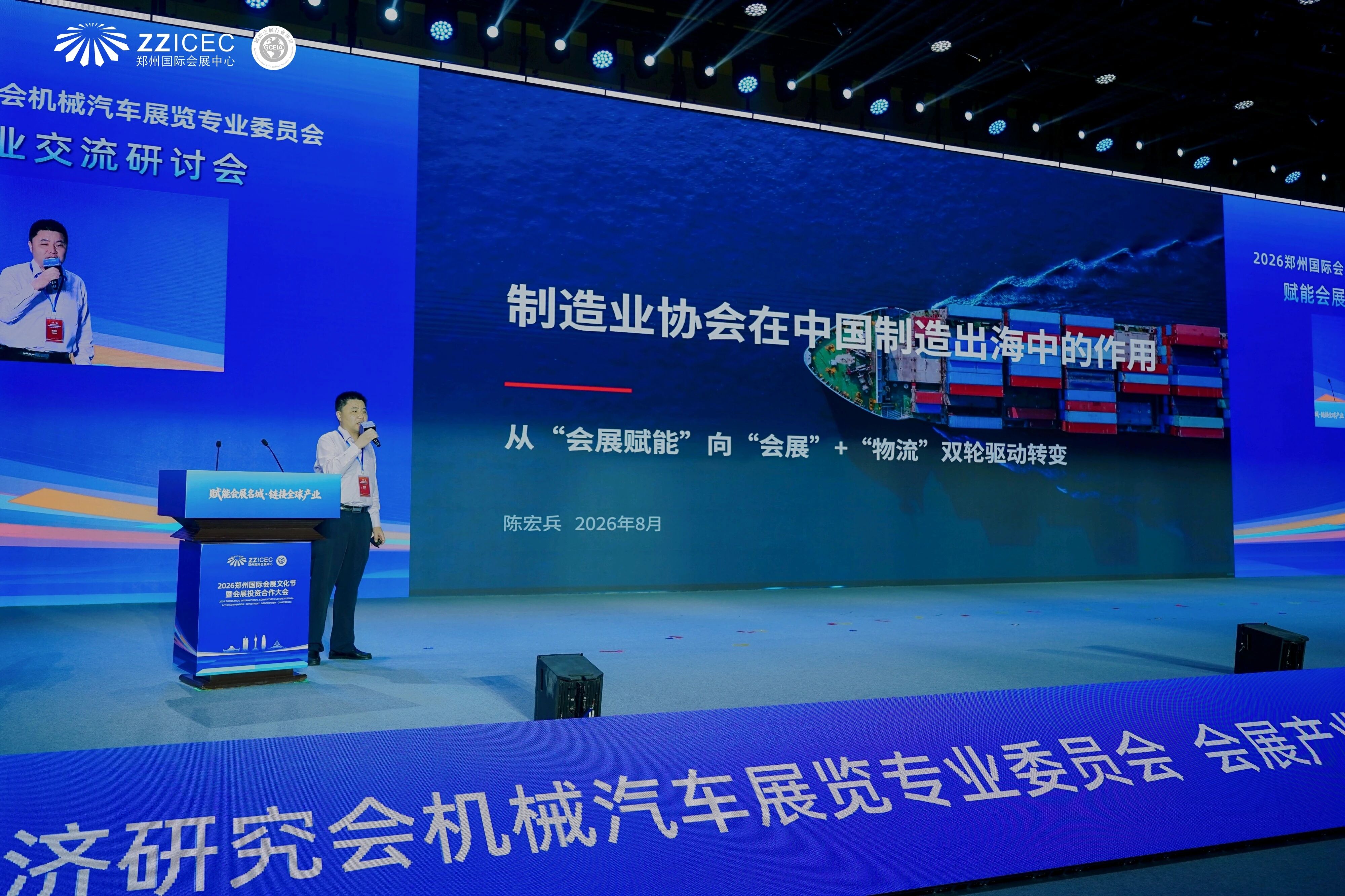
Chen Hongbing, Vice Chairman and Secretary-General of Top 50 Shipping Elites Research Center, was invited to attend the event and delivered a keynote speech titled “The Role of Manufacturing Associations in the Global Expansion of Chinese Manufacturing: From Exhibition Empowerment to a Dual-Engine Model of Exhibition + Logistics.”
In his speech, Chen said that the global expansion of Chinese manufacturing has entered a new stage, shifting from “product exports” to “product + capacity exports”. This transition is not only reflected in the growth and structural upgrade of exports, but is also profoundly reshaping trade models and logistics demand.
From the perspective of trade terms, Chinese manufacturing enterprises are accelerating their shift from F-group terms, represented by FOB and FCA, toward C-group terms such as CIF, CFR, CPT and CIP. Meanwhile, emerging scenarios such as overseas factory parts logistics and overseas engineering project logistics are increasingly adopting D-group terms such as DDP, DAP and DPU.
This trend shows that manufacturing enterprises are moving from passively relying on buyers to arrange transport toward actively controlling the full international logistics chain, placing supply chain security and delivery certainty at an unprecedented strategic height.
Chen analyzed that the international shipping industry has entered a period of “slow growth and strong volatility”. Manufacturing enterprises are facing pain points such as sharp freight rate fluctuations, shortages of containers and space, and difficulty in guaranteeing delivery commitments. Against this backdrop, manufacturers’ logistics needs are shifting from an “extreme cost-oriented” approach to one that balances resilience and security. This also provides manufacturing associations with a new path to serve the evolving needs of their members.
He emphasized that manufacturing associations are accelerating their transformation from traditional service organizations into builders of supply chain ecosystems. Under the national strategy of promoting the integration of manufacturing and logistics, as well as the optimization and strengthening of chambers and associations, associations should fully play their role as bridges between government and enterprises and as platforms for resource coordination.
At the same time, professional exhibitions organized by manufacturing associations have played an important role in the overseas expansion of Chinese manufacturing. However, in light of current supply chain conditions, associations should solve supply chain and logistics challenges faced by small and medium-sized manufacturing enterprises through cross-sector cooperation with logistics industry associations and other channels, realizing a shift from simple “exhibition empowerment” to a dual-engine model of “exhibition empowerment + logistics support”.
At the seminar, Chen specially shared the practical exploration of the International Supply Chain Logistics Exposition (ISL Expo).
Positioned as a platform that “brings together ports, shipping, rail and air transport, and connects foreign trade cargo owners”, ISL Expo has been held in Shanghai for four consecutive editions since 2023. At its fourth edition this year, the event hosted foreign trade and supply chain logistics forums covering 15 popular international trade sectors, including photovoltaics, home appliances and consumer electronics, construction machinery, steel products, tires, cold chain, automobiles and parts, furniture, cross-border e-commerce, pharmaceuticals, chemicals, building materials, semiconductors, power batteries and energy storage systems, and intelligent manufacturing.
Going forward, ISL Expo will establish deeper cooperation with more manufacturing associations. It will provide support including inviting manufacturing associations to hold special sessions at the exhibition site, offering free venues and on-site event services, providing additional funding support for manufacturing associations, connecting manufacturing enterprises with capacity resources from international shipping companies, and jointly promoting preferential cooperation such as BCO long-term contracts for small and medium-sized member enterprises.
The seminar provided new ideas for cross-sector integration among the exhibition, manufacturing and logistics industries. As the “exhibition + logistics” dual-engine model continues to deepen, the global supply chain network supporting the overseas expansion of Chinese manufacturing will become more diversified and resilient.


