

MSC has built an independent and comprehensive global transportation network based on actual market demand, continuously expanding its direct port coverage, improving service flexibility and transport efficiency, and strengthening its resilience against market risks.
Amid a complex and volatile geopolitical environment, the global shipping industry has entered a period of adjustment, with some companies recalibrating their overseas operations and global strategies. Yet Mediterranean Shipping Company (MSC), currently the world’s largest container carrier by capacity, continues to increase its investment in China and deepen its presence in the local market.
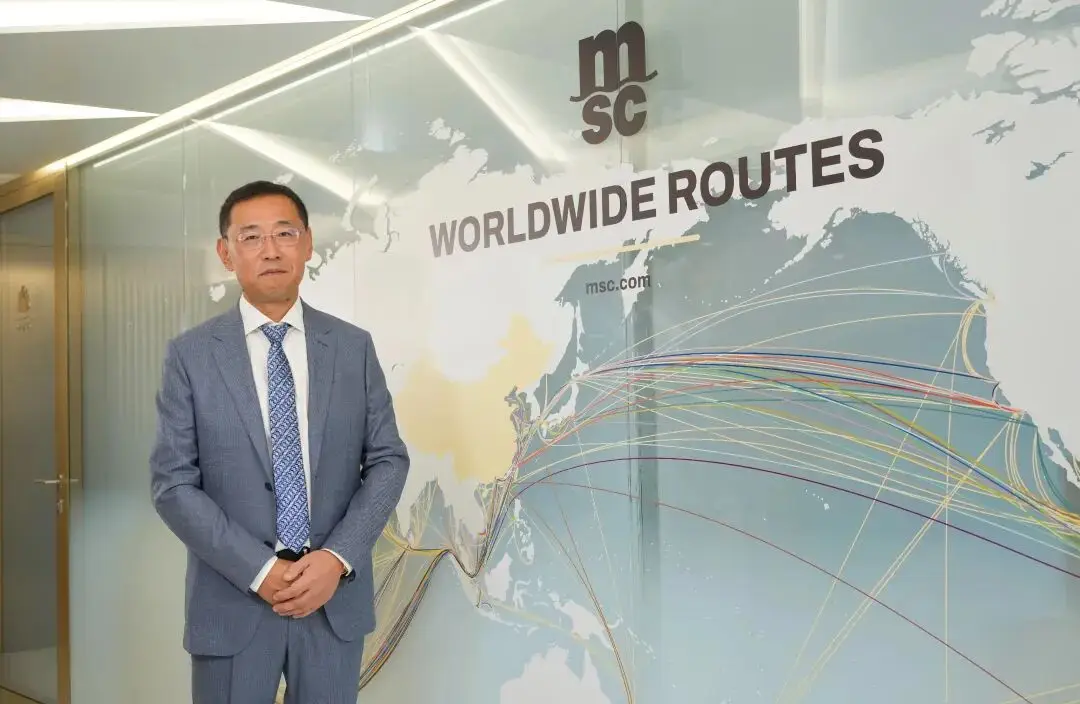
Over the past year, the global shipping alliance landscape has undergone a major restructuring. MSC formally moved away from the alliance-based operating model and entered a new phase of independent operations, establishing an independently controlled east-west network. Supported by its continuously expanding fleet, MSC has further strengthened its leading position in the industry.
According to the latest Alphaliner statistics cited in the article, MSC now operates more than 1,000 vessels and handles 30 million TEUs of containerized cargo annually, becoming the first shipping company worldwide to reach this milestone.
Why, amid an industry adjustment cycle, is MSC continuing to make major commitments to the Chinese market? And how does the shipping giant plan to navigate the cycle and maintain steady growth amid industry transformation?
In an exclusive interview with China Shipping Gazette, Zhu Jing, Managing Director of MSC Greater China, said:
“Leveraging our global shipping network, mature local service capabilities and end-to-end digital service system, MSC continues to strengthen China’s logistics connectivity with global markets. In today’s complex international trade environment, we aim to provide customers in China and overseas with end-to-end logistics services offering broader coverage, greater reliability, and full visibility and control throughout the transportation process.”
Doubling Down on the Chinese Market
In 2025, the recovery of global trade remained moderate and container cargo growth slowed. Intra-Asia, China-Africa and China-Latin America routes gradually became key growth drivers, while demand on traditional long-haul routes remained relatively stable. This has prompted shipping companies to adjust their networks and further develop regional markets.
Zhu said China is one of MSC’s core global markets. Since 2015, MSC has continued to increase investment in China, expanding its business into emerging areas including air cargo and ship management. This, he said, demonstrates MSC’s confidence in the long-term prospects of China’s international trade and its commitment to the Chinese market.
In February 2025, MSC launched its independent east-west network. Centered around China’s major gateway ports, the network provides direct connections to Europe, the Mediterranean, Africa, the Americas and other major trading regions, while continuing to increase service frequency between China and overseas markets.
MSC has also developed services targeting specific regional trade flows. In the second half of 2025, it launched the Irokoservice to West Africa, adding weekly direct sailings from Chinese ports. The Alpaca service shortened transit times between China and the west coast of South America, while intra-Asia services including Sambar, Pertiwi and Orchidwere further optimized to strengthen trade connectivity between China and Southeast Asia.
MSC’s cargo volumes at Chinese ports reached a new high in 2025, with container volumes increasing steadily at major ports nationwide.
The company has also deepened cooperation with Chinese ports and logistics companies in areas including smart ports, green shipping and multimodal transportation.
In Shanghai, MSC has worked with Shanghai International Port Group (SIPG) to optimize empty-container allocation and improve LNG bunkering facilities at Yangshan Port. It has also expanded cooperation with Shandong Port Group in terminal operations, route development and multimodal transportation, supporting Qingdao’s development as an international shipping hub in Northeast Asia.
In Ningbo, MSC has participated in local terminal projects and expanded sea-rail intermodal services, supporting the port’s smart and green transformation.
According to transport authorities cited in the article, MSC became one of China’s largest users of shore power in 2025.
On May 27, 2026, during the 10th Maritime Silk Road Port International Cooperation Forum, MSC signed a memorandum of understanding with the China Waterborne Transport Research Institute and participated in the development of the Ningbo-Zhoushan–Valencia Green Shipping Corridor. Over the next three years, cooperation will focus on green shipping corridors, green fuel supply chains and seafarer capability development.
Upgrading the Global Network
For MSC, leaving the 2M Alliance was not simply a change in cooperation model, but a long-term decision designed to give the company greater control over its network and customer services.
Zhu explained:
“Following the end of the alliance cooperation model, MSC has built an independent and comprehensive global transportation network based on actual market demand. By continuously expanding direct port coverage, we are improving the flexibility and efficiency of our ocean services, helping foreign trade enterprises adapt to changes in global trade patterns while strengthening our own resilience against market risks.”
Traditional manufactured products such as electronics and consumer goods remain important pillars of China’s exports. Meanwhile, exports of automobiles and components, new-energy products, large industrial equipment and materials for major engineering projects continue to expand.
MSC believes its independent operating model enables it to respond more effectively to these changing trade patterns.
The carrier has therefore strengthened services connecting China with Africa, Latin America and Southeast Asia. The Sambar service supports supply chain flows between China and Southeast Asia; Origami and Iroko strengthen Far East-Africa connectivity; and Alpaca supports expanding trade between China and Latin America.
MSC is also developing its multimodal logistics network to serve China’s inland markets. It launched a sea-rail intermodal project through Dalian Port in 2022, followed by a Tongliao-Dalian sea-rail service with Liaoning Port Group in 2024. In 2025, it worked with Ningbo-Zhoushan Port to develop the Quzhou-Zhapu river-sea intermodal route.
To address high logistics costs and delivery inefficiencies, MSC has continued to optimize its Greater China network. It currently operates more than 10 direct services, over 40 mainline services and nearly 20 intra-Asia services each week across Greater China, covering the major Asia-Europe, trans-Pacific and intra-Asia trade corridors.
Zhu said:
“With our independently developed global operating network, MSC can flexibly adjust vessel deployment, sailing frequencies and port coverage in response to changes in market demand, optimize global capacity allocation and provide Chinese exporters with stable and sufficient capacity.”
On the core China-Europe trade, MSC operates independent services including Griffin, Lion, Britannia, Swan and Condor, connecting major Chinese gateways such as Shanghai, Ningbo, Xiamen and Qingdao with European hubs including Rotterdam, Antwerp and Hamburg. The network also extends to Western Europe, Northern Europe, the UK and, through hub connections, parts of Southern Europe.
MSC also dynamically deploys capacity on trans-Pacific routes, connecting major Chinese export ports directly with key ports on the U.S. West Coast and in Canada. By optimizing vessel routings, balancing cargo flows between northern and southern Chinese ports, and utilizing transshipment hubs such as Busan, the company aims to improve vessel efficiency while offering customers competitive transit times and capacity.
In the China-Southeast Asia market, MSC has adjusted and upgraded high-frequency services including Seagull, Seahorse, Saola, Bungaraya and Sambar, providing faster connections between major Chinese ports and Southeast Asian markets.
Zhu said MSC’s network optimization allows it to leverage the extensive global connectivity of Chinese ports, combining frequent sailings, optimized port calls and integrated network coordination to help Chinese exporters expand internationally and improve supply chain competitiveness.
Against a backdrop of slower export growth, MSC is also using its independent operating model to flexibly adjust capacity and slot management according to market conditions, seeking to better align shipping supply with cargo demand.
Accelerating Localization in China
China’s comprehensive industrial system, vast consumer market and continuously improving business environment have made the country an important market for global shipping companies seeking resilience and sustainable growth. These strengths have also underpinned MSC’s decision to deepen its presence in China over the past 28 years.
MSC currently operates across 155 countries and territories on five continents, with services connecting more than 520 ports worldwide. China remains one of its core global markets.
Since entering China in 1998, MSC has established 33 offices across Greater China and employs more than 1,500 people, creating an extensive local service network.
In May 2026, MSC’s new Xuzhou branch officially began operations, marking a further expansion into China’s inland market and enabling the company to provide more localized support to customers.
MSC has also focused on serving regional manufacturing clusters. In Northeast China, the company introduced sea-rail intermodal services in Shenyang to support industries including automotive components, industrial equipment, chemicals and aluminum products, creating inland logistics corridors connecting the region with markets in Europe, Asia and the Americas.
Digitalization has become another major pillar of MSC’s localization strategy.
A range of digital solutions are now available in China, including the myMSC e-commerce platform, eBL electronic bills of lading, smart containers and the iReefer refrigerated-container monitoring system.
These tools enable customers to monitor cargo movements throughout the transportation process, track shipments in real time and improve visibility over expected transit times. MSC is also continuing to digitalize its internal operations, improve coordination across transportation routes and enhance capacity allocation.
Looking ahead, Zhu said MSC will continue accelerating its digital transformation and increasing investment in relevant technologies. The company will explore further applications of digital technology across shipping and logistics scenarios, while improving operational capabilities and service efficiency.
At the same time, MSC intends to retain the human element of its customer service as it continues adapting its services to the evolving needs of the Chinese market.


