

The Pinglu Canal officially opened to navigation on September 16, 2026, establishing a direct inland waterway connection between the Xijiang River system and the Beibu Gulf.
Stretching 134.2 kilometers from the Pingtang River estuary to the Beibu Gulf via the Qinjiang River, the canal began construction in August 2022. Built to Class I inland waterway standards, it can accommodate vessels of up to 5,000 tonnes.
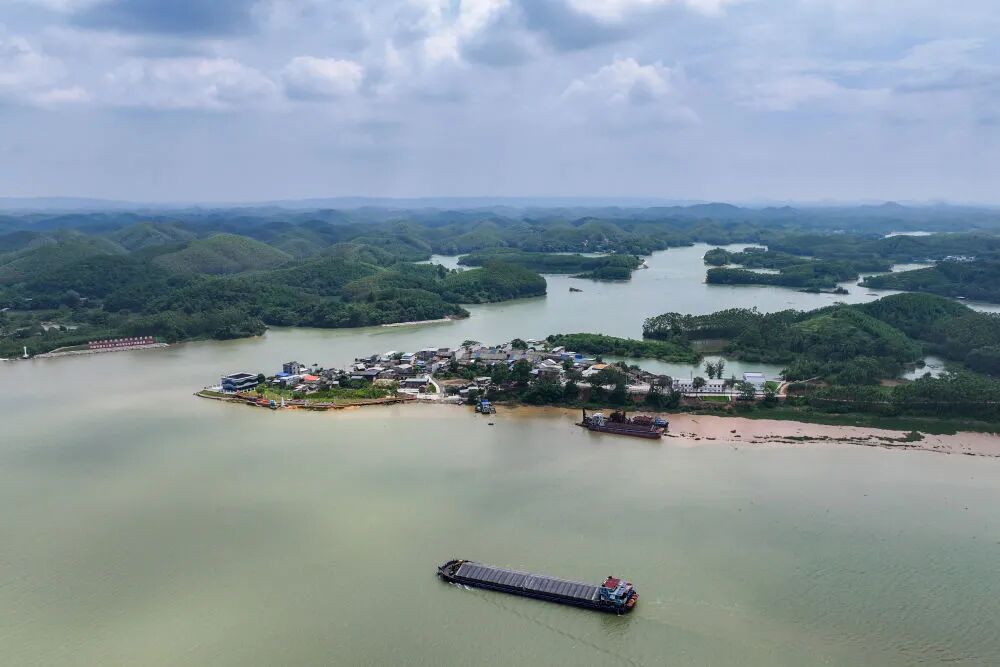
The Pinglu Canal is the first river-to-sea canal project planned and constructed at the national level since the founding of the People’s Republic of China and is a backbone project of the New International Land-Sea Trade Corridor.
A major engineering feature is its water-saving lock system. The Madao Hub has a maximum elevation difference of 29.6 meters, while its lock chamber measures 300 meters long and 34 meters wide. The project employs an innovative three-stage water-saving lock system capable of saving more than 60% of water consumption.
The canal fundamentally shortens Southwest China’s access to the sea. Cargo transported through the canal can reduce the inland waterway distance to the coast by more than 560 kilometers, with logistics costs expected to fall by 18%–30%and annual social transportation costs potentially reduced by approximately RMB 5.2 billion.
By connecting with the China-Laos Railway, China-Europe Railway Express and the New International Land-Sea Trade Corridor, the Pinglu Canal will strengthen rail-river-sea multimodal transport links and provide Southwest China with more direct access to ASEAN and global markets.
The canal is also expected to facilitate two-way trade between China and ASEAN, including exports of automotive components, construction machinery parts and aluminum products, as well as imports of rubber, palm oil and fruit.
Its opening represents a major milestone in China’s inland waterway development and is expected to strengthen the integration of regional supply chains between Southwest China, the Beibu Gulf and ASEAN.


