

Antong Holdings reported revenue of RMB 4.62 billion in the first half of 2026, up 5.25% year on year, while net profit increased 28.14% to RMB 656 million.
During the reporting period, Antong completed 1.62 million TEUs of domestic ocean freight volume, up 3.92% year on year.
The company attributed its growth to network optimization and service upgrades, which slightly increased its average domestic ocean freight rate and improved the profitability of domestic logistics operations.
 In the international shipping market, the charter market remained strong. Antong continued to deploy some vessels into foreign trade container shipping through time charter arrangements, generating positive operating results.
In domestic trade, Antong continued to optimize its route network and strengthen port-shipping cooperation. It worked with Dongguan Port, Wenzhou Port and Tianjin Port to develop high-quality north-south express services, and also launched routes including Tianjin–Shantou and Zhanjiang–Tianjin.
The company also expanded multimodal transport services by integrating container trucking resources, offline service outlets, terminals, vessels and mainline capacity. Through a “one-stop acceptance, one-ticket-through” model, Antong aims to improve end-to-end transport efficiency and reduce coordination costs for customers.
Guangzhou Port Reports H1 Net Profit of RMB 556 Million
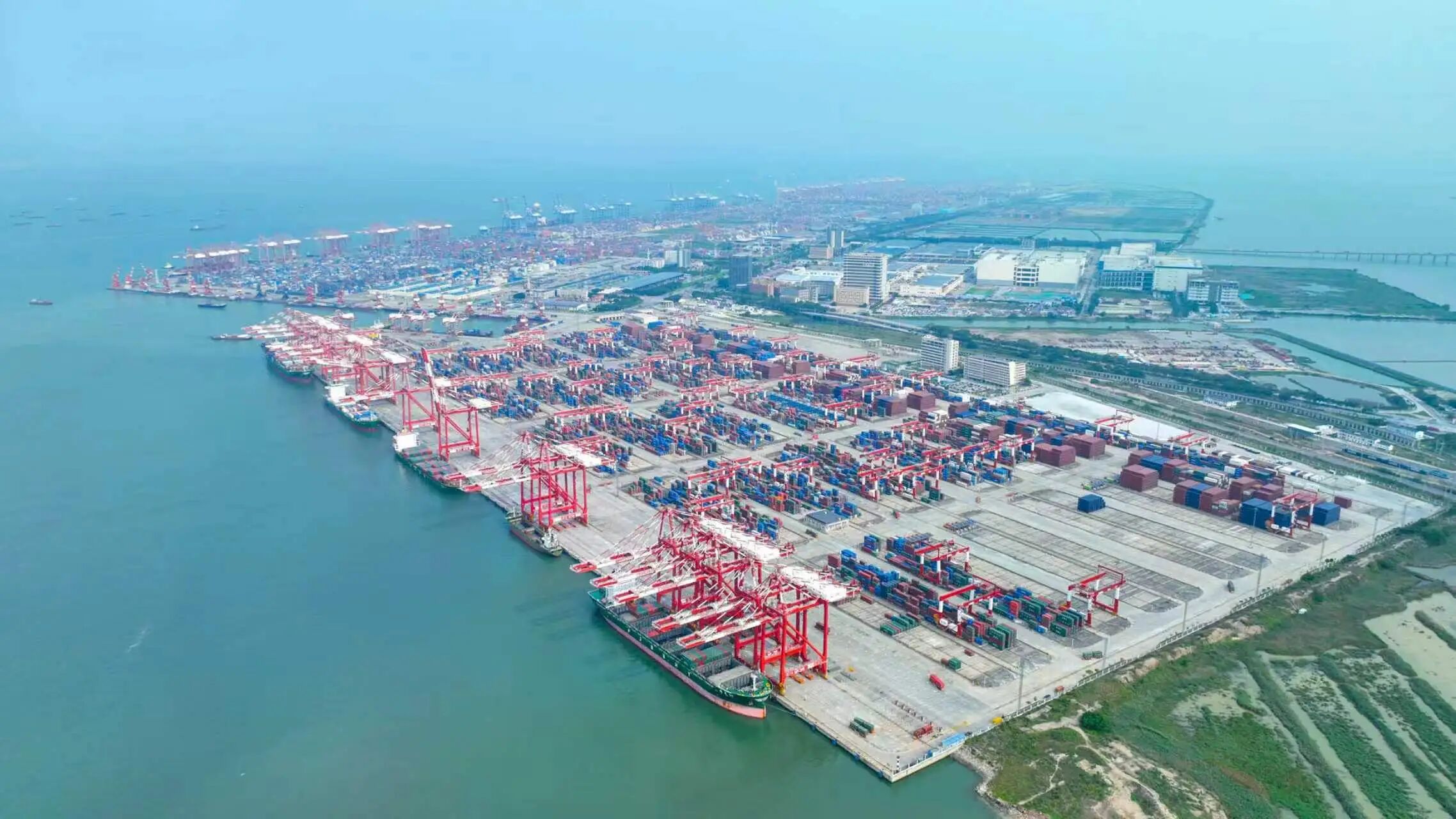
Guangzhou Port Co., Ltd. reported revenue of RMB 6.56 billion in the first half of 2026, down 4.99% year on year, while net profit attributable to shareholders rose 0.76% to RMB 556 million.
During the reporting period, Guangzhou Port handled 294 million tonnes of cargo, up 2.5%, and 13.92 million TEUs of containers, up 3.9%. Foreign trade container throughput reached 7.83 million TEUs, up 13.5%, accounting for 56.2% of total container volume.
The port opened four new container routes, bringing its total number of container liner services to 231, including 186 foreign trade services.
Guangzhou Port also optimized its inland port and inter-provincial rail network. It established the Guigang inland port and operated 39 inter-provincial rail services covering Hunan, Hubei and Chongqing. Sea-rail intermodal volume reached 286,000 TEUs, including 242,000 TEUs handled by the Nansha Port Railway.
In digital transformation, Guangzhou Port accelerated the development of GTOS and GBOS systems, built a unified customer service platform, and improved digital service standards. It also promoted green port development, including two new intelligent electric inland vessels, shore power services and ship pollution reception management.
Guangzhou Port said it will continue extending along the industrial chain, strengthening cooperation with shipping companies, cargo owners and logistics firms, and building itself into a more efficient, smart, green and safe world-class port.


